
What is CFD trading and how does it work?

Contracts for difference (CFDs) let you trade on the price movements of financial markets, such as stocks, indices, commodities, cryptocurrencies, and forex without owning the underlying assets. Learn everything you should know about CFD trading and how to use CFDs to go long and short on assets.
Key takeaways
- A CFD lets you trade on an asset's price movements without owning the underlying asset.
- You can go long if you think the price will rise, or short if you think it will fall.
- CFDs use leverage, meaning you put down only a fraction of the position's full value as margin.
- Leverage can amplify both profits and losses.
- It's essential to understand margin, costs and risk management before trading CFDs.
What is a contract for difference (CFD)?
A contract for difference (CFD) is a type of financial derivative. It lets you take a position on the changing price of a market without buying or owning the underlying asset.
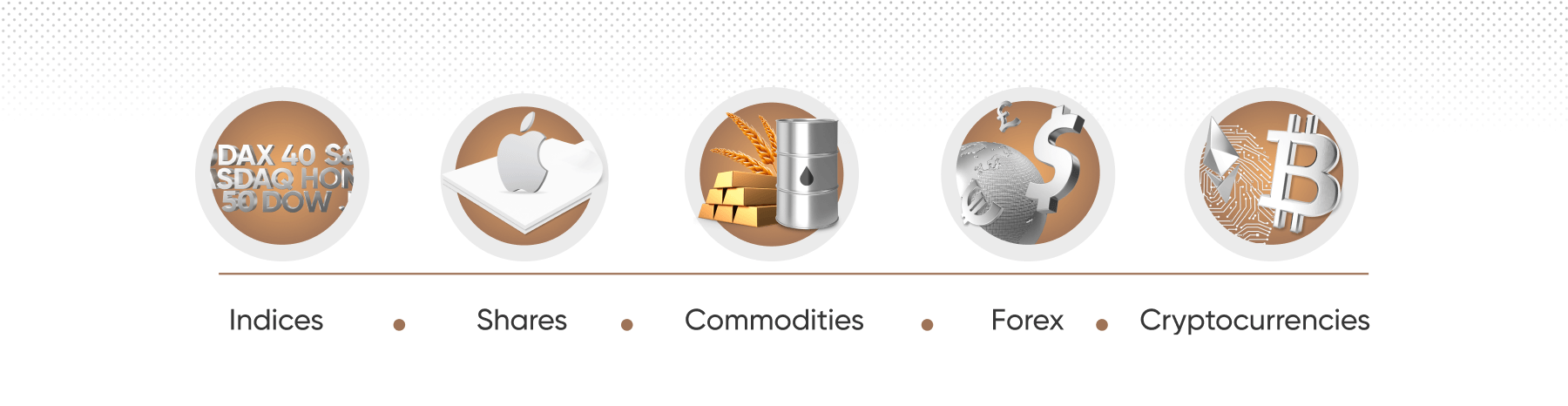
CFDs let you speculate on various financial markets, including cryptocurrencies, shares, indices, commodities and forex pairs. You never buy the assets, but speculate on the rise or fall in their price.
Potential profits or losses are determined by how far the market moves and the size of your position.
A CFD is a contract between a broker and a trader who agree to exchange the difference in value of an underlying asset between the beginning and the end of the contract.
A contract for difference (CFD) is:
- A derivative – you do not own the underlying asset
- An agreement between you and your broker
- Based on the change in an asset's price
- Commonly traded using margin and leverage
You can trade in either direction. You open a long position if you think the market will rise, or a short position if you think it will fall. In either case, you'll make a profit if the market moves in your favour and a loss if it moves against you.
Because CFDs are leveraged, you only put down part of the position's full value as margin. This increases your market exposure relative to the amount you deposit, but also magnifies potential losses.
How does CFD trading work?
When you open a contract for difference (CFD) position, you select the number of contracts (the trade size) you would like to buy or sell. Your profit will rise in line with each point the market moves in your favour. If the market moves against you, your loss will increase instead.
Buy
If you think the price of an asset will rise, you would open a long (buy) position, profiting if the asset price rises in line with your expectations. However, you would risk making a loss if the asset price falls.
Sell
If you think the price of an asset will fall, you would open a short (sell) position, profiting if it falls in line with your prediction. However, once again, you would risk making a loss if the asset price rises.
Past performance is not a reliable indicator of future results. Prices can move differently from what you expect, sometimes quickly.
What is a CFD account?
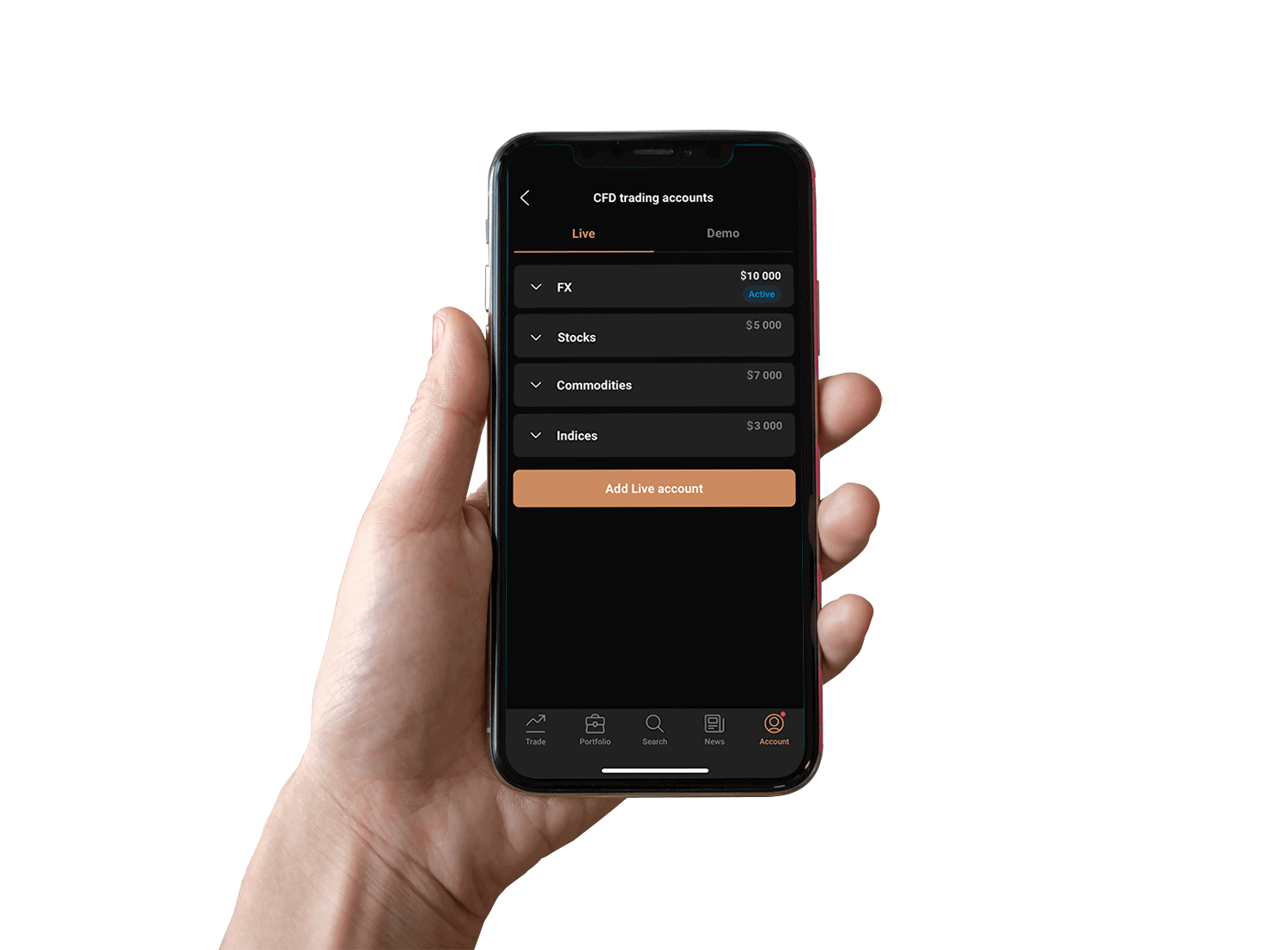
A contract for difference (CFD) account lets you trade on the price difference of various underlying assets using leverage. Leverage means you put up only a fraction of the amount needed to trade. This is called deposit margin.
Meanwhile, the maintenance margin (required margin) needs to be covered by equity, which is the account's balance that includes unrealised profits and losses. The maintenance margin goes up and down depending on the prices of assets you are trading. Your account's equity must always cover the maintenance margin to keep the positions open, especially in case of running losses. Otherwise, you risk receiving a margin call.
Often you can learn to trade in a demo account, but you will need to add funds to create a CFD trading account before you can trade live.
Some regulators require that new customers pass an 'appropriateness or suitability' test. This often means answering some questions to demonstrate that you understand the risks of trading on margin. It's best to thoroughly educate yourself on how leverage and margin work before trading.
Margin definition
Margin is the amount you need to put down to open or maintain a leveraged position. Deposit margin is needed to open a trade, while maintenance margin must be covered by your account equity to keep positions open.
Learn more with our margin guide.
What is leverage in CFD trading?
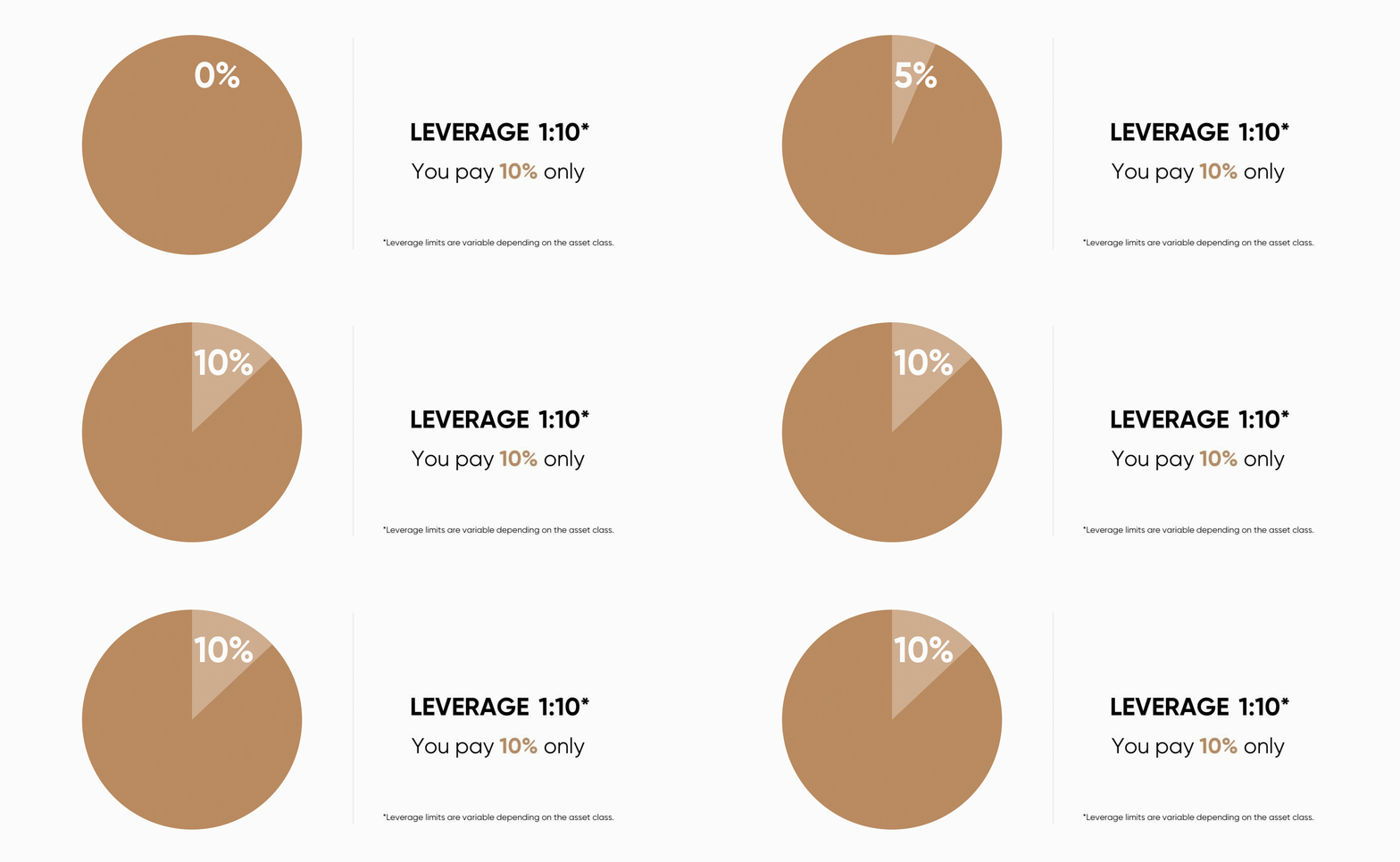
When you trade contracts for difference (CFDs), you put down only part of the value of your trade as margin, while leverage gives you exposure to the rest of the position. The amount you need to put down can vary. Leverage magnifies both profits and losses.
Leveraged trading is also referred to as trading on margin. A 10% margin means that you have to deposit only 10% of the value of the trade you want to open. For a $1,000 position with a 10% margin requirement, for example, you would put down $100 in initial margin.
Leverage definition
Leverage allows you to gain exposure to a larger position while putting down only part of its full value as margin. Both profits and losses relate to the full position. Learn more on our leverage glossary page.
Leverage example (CFD trade)
If you want to place an order for $1,000-worth of Brent crude oil CFDs and your broker offers 10:1 leverage, you will need only $100 as the initial amount to open the trade.
Your profit or loss, however, is based on the full $1,000 exposure, rather than the $100 margin.
- For a long position, if Brent's price rises by 5%, your gross profit would be about $50 (minus spreads and fees). If it falls by 5%, your gross loss would be about $50 (plus spreads and fees).
- For a short position, the opposite applies: a 5% fall would result in a gross profit of about $50 (minus spreads and fees), while a 5% rise would result in a gross loss of about $50 (plus spreads and fees).
In both cases, the $50 movement equals 50% of the $100 you initially put down.
As CFDs are leveraged products, you can open much larger positions with a lower initial deposit than you need to buy traditional shares. For example:
| Feature | CFD trade | Share trade |
|---|---|---|
| Sell / Buy Price | 135.05 / 135.10 | 135.05 / 135.10 |
| Deal | Buy at 135.10 | Buy at 135.10 |
| Deal size | 100 shares | 100 shares |
| Funds required to open a trade | $2,702 = $135.10 Buy price x 100 shares x 20% margin (Margin required) | $13,510 (100 shares at 135.10) |
| Close price | Sell at 150 | Sell at 150 |
| Profit | $1,490((150 - 135.10) x 100 shares = $1,490) | $1,490(15,000 – 13,510 = $1,490) |
This example shows what happens if Apple's price rises. If the price falls instead, both positions can make a loss. Because the CFD position uses leverage, that loss can represent a larger proportion of the amount initially required to open the trade.
What are the costs of CFD trading?
Capital.com’s minimum deposit depends on the payment method, account currency and applicable entity. Learn more on our fees and charges page.
You can open an account for free and practise in demo mode. CFDs are complex instruments and may not be suitable for everyone. Consider whether you understand how CFDs work and the risks involved before trading live.
With some brokers, CFD costs include a commission for trading various financial assets. However, Capital.com doesn't take commissions for opening and closing trades, for deposits or withdrawals. Banks or payment service providers can charge you on deposits or withdrawals.
The major CFD cost is the spread – the difference between the buy and sell price at the time you trade. An overnight funding adjustment also applies if you keep a trade open overnight.
Spread and commission
With CFD trading, your broker quotes two prices based on the value of the underlying instrument: the buy price (ask) and the sell price (bid).
The buy price is always higher than the sell price. The difference between the two is the spread. At Capital.com, this is how we make most of our money. However, we don't charge commission for opening or closing trades.
You open a long position at the buy price and close it at the sell price. You open a short position at the sell price and close it at the buy price. This means the spread forms part of the cost of opening and closing a CFD trade.
Spread definition
The spread is the difference between the buy and sell price of a CFD. Learn more with our spread guide.
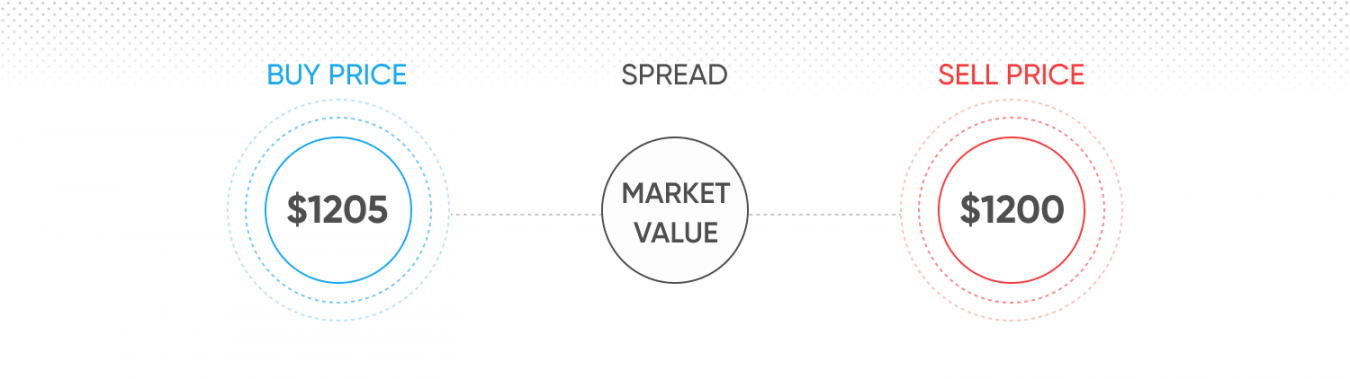
For example, if you expect gold prices to rise, you may decide to open a long gold spot CFD position. Imagine gold is quoted at $1,200/$1,205. The $5 difference between the sell and buy prices is the spread. You then buy 100 gold CFDs.
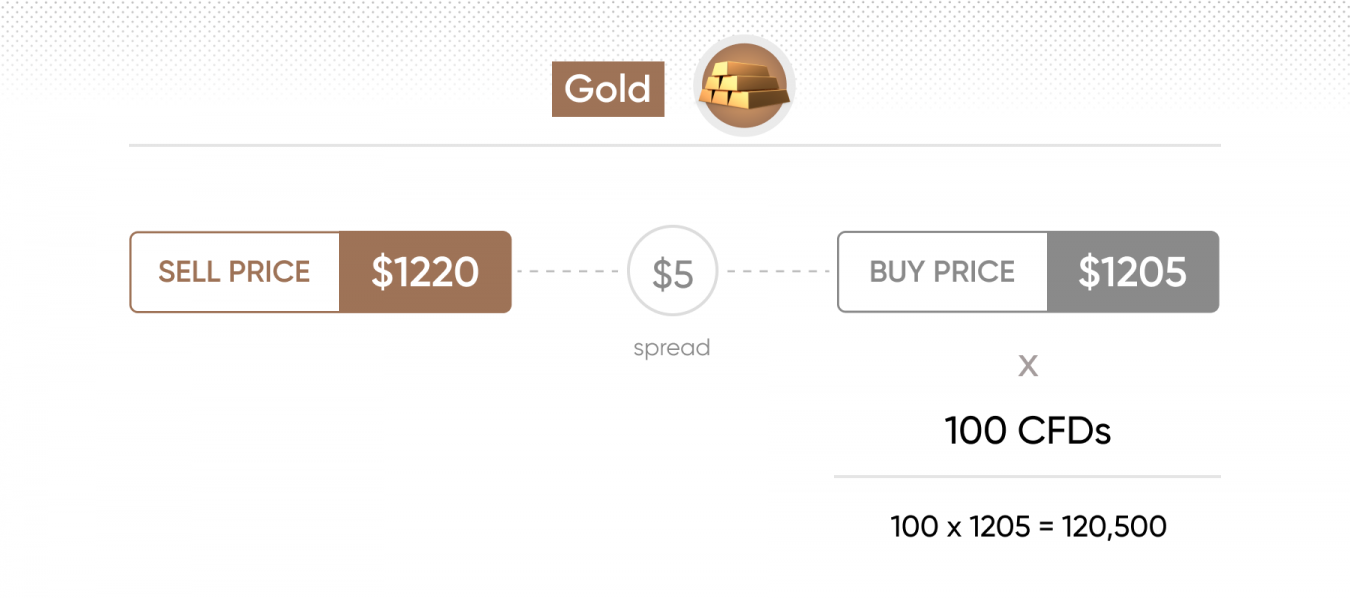
Now imagine that the price of gold increases as expected. Note that all trading contains risk of loss, and past performance is not a reliable indicator of future results.
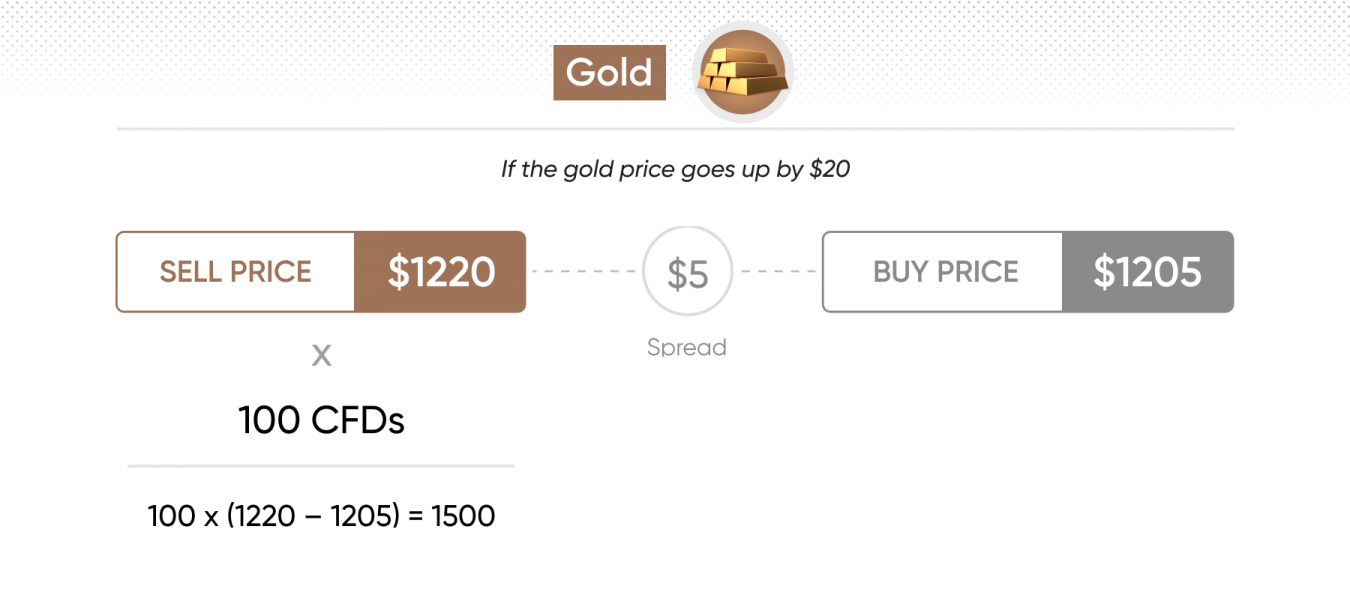
If gold falls instead, the long position would make a loss. The size of that loss would depend on how far the price falls and the size of the position.
What assets can you trade with CFDs?
You can trade CFDs on cryptocurrencies, shares, ETFs, indices, commodities, cryptocurrencies, and forex. Capital.com provides access to 5,500+ markets, Availability varies by entity and jurisdiction.
Share CFDs
Share CFDs let you trade on changes in an individual company's share price without owning its shares. One share CFD typically corresponds to one underlying share for position sizing.
Under FCA/EU retail rules, individual share CFDs are capped at 5:1 leverage, equivalent to a 20% initial margin; corporate actions such as dividends may also result in cash adjustments.
Forex CFDs
A Forex CFD let you trade currency pairs such as EUR/USD or GBP/USD. A forex CFD gives you exposure to changes in the exchange rate between two currencies, without owning either currency. A standard forex lot represents 100,000 units of the base currency, although CFD providers may offer smaller position sizes.
For retail clients, FCA and EU rules generally cap leverage at 30:1 for major currency pairs, equivalent to a 3.33% margin requirement, and 20:1 for non-major pairs, equivalent to 5% margin.
Index CFDs
Index CFDs let you trade on the changing value of an index, which tracks a group of shares.
An index CFD gives you exposure to movements in the index without owning its constituent shares. Contract sizes vary by market and may represent a fixed monetary value per index point; under FCA/EU retail rules, major indices are capped at 20:1 leverage (5% margin) and non-major indices at 10:1 (10% margin).
Commodity CFDs
Commodity CFDs include markets such as gold, oil and natural gas.
A commodity CFD gives you exposure to movements in the commodity's price without owning the physical asset. Contract sizes vary by market and can be based on units such as ounces or barrels; under FCA/EU retail rules, gold is capped at 20:1 leverage (5% margin), while other commodities are generally capped at 10:1 (10% margin).
Cryptocurrency CFDs
Cryptocurrency CFDs let you trade on cryptocurrency price movements without owning or holding the coins or tokens themselves.
Trade sizes vary by market and fractional quantities may be available; under EU retail rules, crypto CFD leverage is capped at 2:1 (50% margin), reflecting the asset class's higher volatility. Crypto derivatives aren't available to UK retail clients.
Profit and loss
Once you've identified an opportunity and you're ready to trade, you can open a position. From this point, your CFD profits or losses will move in line with the underlying asset's price in real time.
You'll be able to monitor open positions on the platform and close them when you want.
Profit and loss definition
Profit and loss (P&L) shows how much a CFD position has gained or lost based on the price movement and the size of your position.
Formula:
P&L = number of CFDs x (closing price – opening price)
This formula applies to a long position. For a short position, reverse the opening and closing prices.
You can calculate P&L for any individual position. If you have more than one open position, their P&Ls combine to form the total P&L or UPL (unrealised profit and loss).
What is the contract length of a CFD?
Most CFD trades have no fixed expiry date, meaning that the CFD contract length is unlimited. You typically close a trade by placing an opposite order of the same size – for example, you would close a buy trade of 100 CFDs by selling 100 CFDs. Hedging mode works differently because it allows you to hold opposing positions at the same time.
If you hold a trade open overnight, an overnight funding adjustment applies to your position.
Why some traders use CFDs for shorter-term trading
Overnight funding adjustments can build up when you keep a leveraged CFD position open for longer.
For this reason, traders may use CFDs for short- to medium-term positions rather than long-term buy-and-hold investing. The longer you keep a leveraged trade open, the more important ongoing funding costs can become to the overall result.
These costs don't tell you which way the underlying market will move. The price may still rise or fall depending on the factors affecting that market.
How dividends and corporate actions affect share CFDs
When you trade a share CFD, you don't own the underlying share, so you don't receive a dividend in the same way as a shareholder. Instead, your broker may make a cash adjustment when you hold an eligible position on the ex-dividend date.
For example, Capital.com would generally credit a long CFD position and deduct an adjustment from a short position. This reflects the effect the dividend would otherwise have on the underlying share price.
Risks of CFD trading
CFDs are complex instruments and involve a high degree of risk. Understanding these risks can make it easier to see how a loss might occur and how to manage them with risk-management tools.
- Leverage risk. Leverage gives you exposure to a larger position than your margin. It can magnify profits when the market moves in your favour and magnify losses when it moves against you, so even small price moves can significantly affect your account.
- Counterparty risk. A CFD is a contract between you and your broker, so the broker’s financial standing, regulatory status and operating arrangements matter.
- Liquidation and margin call risk. Your account must maintain enough equity to meet margin requirements. If your margin level falls, you may receive a margin call and, at the applicable closeout level, Capital.com can close positions automatically. Fast market moves can accelerate this process.
- Overnight and gap risk. Markets can reopen at a significantly different price from where they closed. If a market gaps through a standard stop-loss, it may execute at the next available price rather than your chosen level.
- Volatility risk. Higher volatility can lead to larger price moves in either direction, increasing both potential profits and potential losses.
- Regulatory risk. CFD rules vary by jurisdiction and can change over time, affecting available products, leverage and account protections.
- Psychological and discipline risk. Losses can encourage excessive risk-taking, while profitable trades can lead to overconfidence. A trading plan and predefined risk levels can provide structure, but they can’t remove market risk or guarantee an outcome.
Risk-management tools for CFD trading
Once you set up your account and devise a trading plan, you need to decide how much you are willing to risk to formulate an appropriate CFD risk management strategy. You could also consider how the number and size of your open positions affect your margin level.
There are various tools and approaches that can help you manage potential losses in trading, however they do not eliminate risk.
The aim is to understand how much exposure you're taking and how that fits with your trading approach.
Stop-loss and take-profit
You could consider setting up limit orders to automatically close a position at a given profit level.
Take-profit orders
Take-profit orders can reduce the chance of holding on to a profitable trade for too long and then seeing the price move back against you.
Stop-loss orders
Stop-loss orders can mitigate CFD risks and restrict potential losses. A stop-loss triggers when the market reaches the level you set and closes the position at the next available price. Volatile markets, lack of liquidity or large order sizes can cause slippage. A guaranteed stop-loss can protect against slippage, and incurs a fee if activated.
Margin calls, margin closeouts and negative balance protection
To keep positions open, you must meet the maintenance margin requirement. Your account's overall equity must cover the maintenance margin.
The value you maintain in a margin account acts as collateral for credit. If your account equity falls below the maintenance margin, Capital.com notifies you via a 'margin call'. At that point, you will either need to top up your balance or close some of your positions to reduce your exposure.
If you do not act and your account reaches the closeout level, Capital.com starts a gradual closeout procedure on your positions. We call this margin closeout.
Capital.com provides negative balance protection (NBP) for CFD accounts. If your balance falls below zero after margin closeout, the NBP mechanism brings your account back to zero.
Consider whether you understand how CFDs work and whether you can afford the risks that come with CFD trading before opening a position.
Hedging
Hedging is a risk-management technique that aims to offset some of the risk in another position or portfolio. However, hedging doesn't remove risk, and a hedge won't necessarily move by the same amount as the position you're trying to offset.
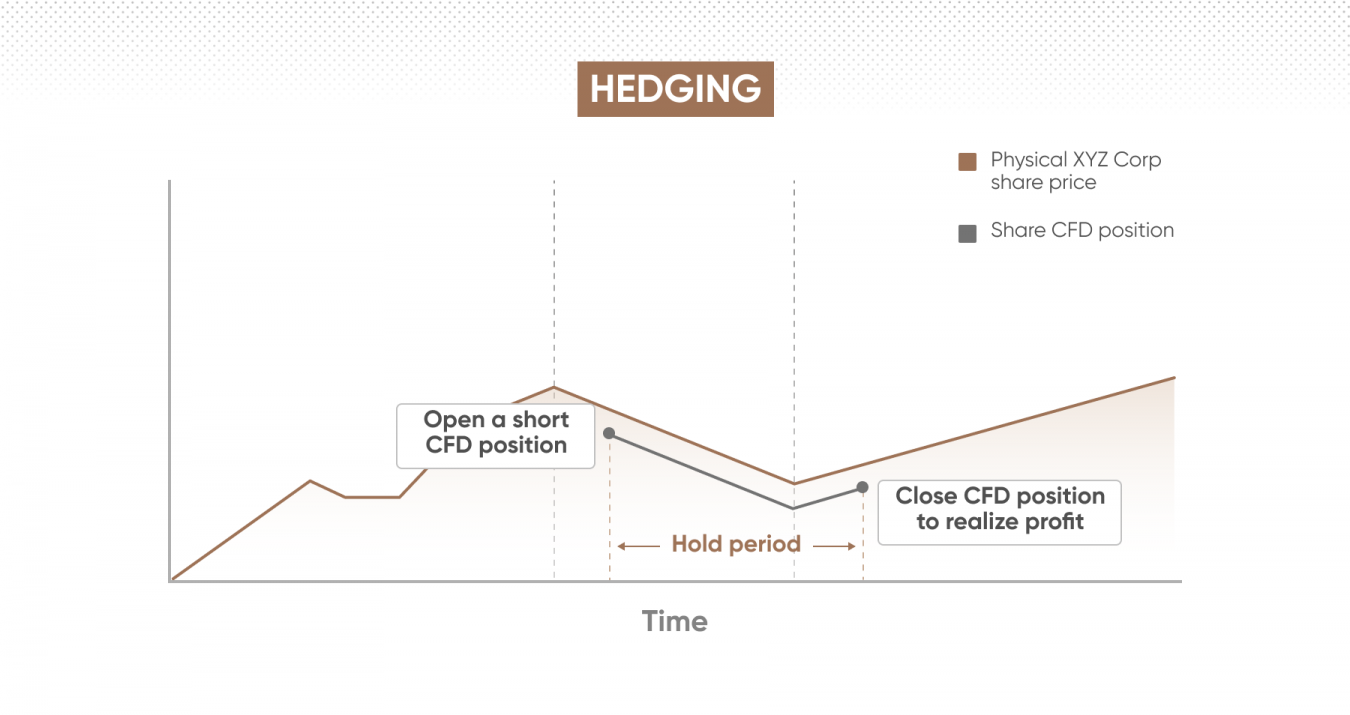
For example, imagine you have a portfolio of blue-chip shares that you want to hold for a certain period. You think the wider market may experience a short dip and are concerned about how that could affect the value of your portfolio.
You could use a short CFD position to hedge against some of that downside.
If the market falls, a gain on the short CFD may offset some of the loss on your portfolio. If the market rises instead, your portfolio may gain while the hedge makes a loss.
The size of the positions, how closely the two markets move together and applicable trading costs all affect how well the hedge works.
Learn more with our hedging guide.
CFDs vs futures vs stocks
CFDs are one of several ways to gain exposure to financial markets. The products share some features, but they differ in areas including ownership, leverage, expiry and costs.
| Feature | CFDs | Futures | Stocks/shares |
|---|---|---|---|
| Asset ownership | No | No | Yes |
| Expiry date | Most cash CFDs have no fixed expiry | Usually fixed | No fixed expiry |
| Tax treatment | Depends on jurisdiction and circumstances | Depends on jurisdiction and circumstances | Depends on jurisdiction and circumstances |
| Market access | Shares, forex, indices, commodities and other markets | Depends on available futures contracts | Listed shares and other securities |
| Margin/leverage | Yes | Yes | Not when buying outright |
| Typical costs | Spread and possible overnight funding | Contract, commission and other trading costs may apply | Trading and other provider fees may apply |
How is CFD trading regulated?
CFD regulation varies between countries. Your jurisdiction determines which products, leverage limits and client protections apply to you.
Capital.com group entities operate in multiple jurisdictions.
CFDs are complex instruments and come with a high risk of losing money rapidly due to leverage. 79.75% of retail investor accounts lose money when trading CFDs with this provider. You should consider whether you understand how CFDs work and whether you can afford to take the high risk of losing your money.
Capital Com Online Investments Ltd is a limited liability company with company number 209236B. Capital Com Online Investments Ltd is a Company registered in the Commonwealth of The Bahamas and authorised by the Securities Commission of The Bahamas with license number SIA-F245. The Company’s registered office is at #3 Bayside Executive Park, Blake Road and West Bay Street, P. O. Box CB 13012, Nassau, The Bahamas.
You can find licence and regulatory information for our UK, EU, Australian, Bahamas and UAE entities, and learn more about our security measures.
Leverage limits
Retail leverage limits also vary by market and regulatory framework. Under FCA and EU retail rules, leverage is capped at 30:1 for major currency pairs; 20:1 for non-major currency pairs, gold and major indices; 10:1 for other commodities and non-major indices; and 5:1 for individual shares. EU retail crypto CFD leverage is capped at 2:1, while crypto derivatives aren't available to UK retail clients.
These limits reduce the amount of leverage available, but they don't remove the risk of loss. Regulatory frameworks may also include margin-closeout rules, negative balance protection and standardised risk warnings.
Is CFD trading right for you?
CFDs won't suit everyone.
They may suit traders who understand leverage, are prepared to manage their positions actively and can accept the possibility of significant losses.
Before trading, consider whether you:
- Understand how leverage and margin work
- Understand the costs involved
- Are comfortable monitoring leveraged positions
- Know what can trigger a margin call or closeout
- Have a plan for managing risk
- Can afford the losses that may result if the market moves against you
CFDs may suit you less if your main aim is to build a passive, long-term portfolio and own the underlying assets.
For example, buying a share directly gives you ownership in the company, while trading a share CFD doesn't. Direct share investing and CFD trading involve different risks, costs and objectives, so the distinction matters when you consider what fits your aims.
A demo account can help you become familiar with how CFDs and the trading platform work using virtual funds before you decide whether to trade live.
How to start trading CFDs
Once you understand how CFDs work and the risks involved – if you decide to trade, you can follow these steps to start:
- Step 1. Do your analysis Use relevant charts, indicators, company information, economic releases or market news. Consider evidence for both rising and falling prices.
- Step 2. Choose a market Select the share, forex pair, index, commodity or other CFD you want to trade, and consider what could move its price up or down.
- Step 3. Choose buy or sell Buy if you think the market may rise, or sell if you think it may fall. Consider what could challenge your view and how you’d respond.
- Step 4. Set your position size and leverage Choose your trade size, check the margin required and consider how much you could lose if the market moves against you.
- Step 5. Set your stop-loss and take-profit Add orders to define possible exit points. Standard stop-losses can be affected by slippage, so they don’t guarantee an exact execution price. Guaranteed stop-loss orders incur a fee if activated.
- Step 6. Open and monitor the position Track your P&L, available margin and relevant market developments. Close the trade according to your plan, unless an order or margin closeout closes it first.
A clear process can help you stay consistent, but every CFD trade still carries the risk of loss.
Recap
- CFDs let you trade on changes in a market's price without owning the underlying asset.
- You can go long if you think the price may rise or short if you think it may fall. Because CFDs use leverage, you put down only part of the position's value as margin, while your profits and losses relate to the full position.
- That makes leverage, margin, trading costs and risk management important parts of understanding how CFDs work.
- Before trading, consider the risks, what could move the underlying market in either direction and which rules apply in your jurisdiction.
Intuitive platform
Get the tools you need to trade with confidence, including the latest TradingView charts, timely market insights and updates from Newsquawk, and more.

Fair and transparent fees
Get full clarity on the spreads and fees we charge.
TradingView and MT4
Seamlessly integrate our smart platform with elite third-party software.
Comprehensive education
Improve your trading knowledge with our free guides and courses.
Free demo account
Refine your strategies and develop your skills with zero risk to your capital.
Rapid withdrawals
99.66% of withdrawals are processed within one business day, according to our internal server data from 2026.
FAQ
What is a CFD in simple terms?
A contract for difference (CFD) is a contract between you and a broker based on the change in an underlying asset's price. You don't own the asset itself. Instead, your profit or loss depends on how its price changes between opening and closing the CFD, along with the size of your position and any applicable costs. CFDs are traded on margin, leverage amplifies both profits and losses.
How do brokers make money from CFDs?
CFD brokers can earn money in different ways. At Capital.com, the spread – the difference between the buy and sell price – is how we make most of our money. Other charges, such as overnight funding adjustments, may also apply.
Does a CFD expire?
Most CFD trades have no fixed expiry date. You generally close a position by placing an opposite order of the same size. Some CFD instruments may work differently, so check the relevant market information before trading.
What is a margin call?
A margin call happens when your account equity falls relative to the maintenance margin required for your open positions. You may need to add funds or reduce your exposure. If your margin level reaches the closeout level, Capital.com can begin closing positions automatically.
How are CFDs different from stocks?
A CFD lets you trade on changes in a share price without owning the underlying share. Buying a stock or share gives you ownership of part of the company. CFDs can also provide leveraged long or short exposure, while buying shares outright generally involves paying their full value upfront. CFDs are traded on margin, leverage amplifies both profits and losses.
How are CFDs different from futures?
Both CFDs and futures are derivatives, so neither requires you to own the underlying asset. One of the main differences is expiry. Most cash CFDs don't have a fixed expiry date, while futures contracts usually do. Their contract structures, markets and costs can also differ.
How are CFDs different from spread betting?
Can I trade CFDs in the US?
US rules don't allow retail CFD trading under the same model used in jurisdictions such as the UK, Europe and Australia. Rules vary between countries, so check which products you can access where you live.
How are CFDs taxed?
Tax treatment depends on your country and individual circumstances, and rules can change. Capital.com doesn't provide tax advice. If you need guidance on your own tax position, consider speaking to an independent tax professional.
How do dividends work with CFDs?
You don't receive a dividend as a shareholder because you don't own the underlying share. Instead, Capital.com may apply an adjustment when you hold an eligible CFD position as the share goes ex-dividend. Capital.com generally credits long positions and deducts the adjustment from short positions.

