

US equities face big inflation test
Markets await the latest CPI data in the US as the missing peace of information in the hopes that the Fed may not have to hike rates in 2026.
US equities are hovering near record highs, but the next leg of the rally will depend on Wednesday's US inflation report. After another strong earnings season, particularly among the technology giants, investors have become increasingly comfortable with the idea that the economy can continue expanding without forcing the Federal Reserve into further policy tightening. Whether that optimism proves justified now hinges on the inflation data.
US Tech 100 daily chart
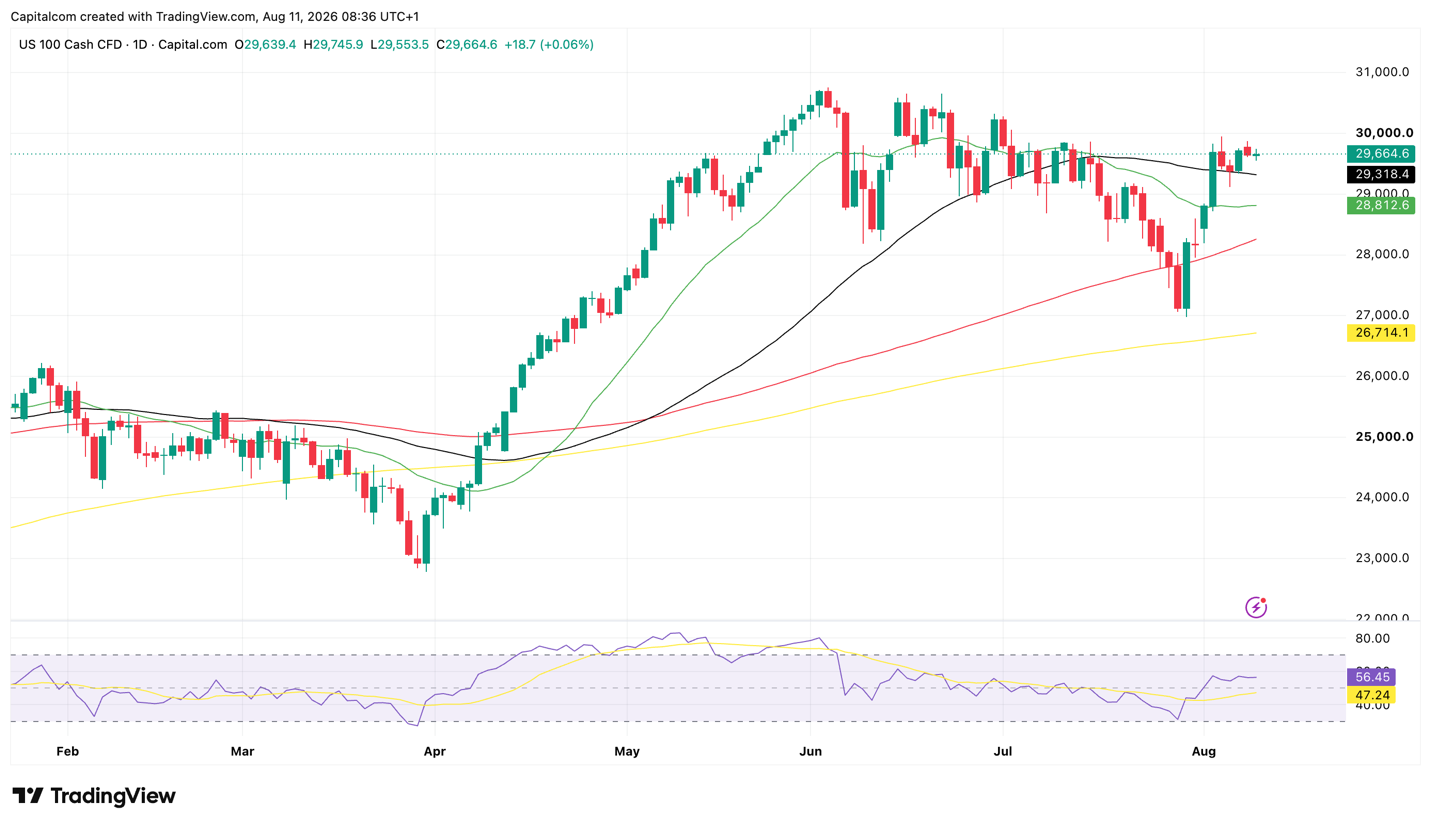
Past performance is not a reliable indicator of future results.
Recent economic releases have painted a mixed picture. The labour market has softened, with July payrolls unexpectedly contracting and previous months revised lower, suggesting hiring is beginning to cool. At the same time, second-quarter GDP growth undershot expectations, pointing to an economy that is gradually losing momentum. Those developments helped convince markets that the Fed can afford to remain on hold for longer, easing pressure on Treasury yields and supporting risk assets.
Inflation, however, remains the missing piece of the puzzle. Core CPI surprised to the downside last month, fuelling hopes that price pressures are finally moving sustainably towards the Fed's 2% target. Consensus expectations suggest another modest easing this week, and a similar outcome would reinforce the view that policymakers can continue their "wait-and-see" approach. That would likely support equities further, particularly the technology sector, which has benefited from lower yields and improving confidence in the AI investment cycle.
The risk for markets is that inflation proves more resilient than expected. Energy prices remain well above levels seen before the renewed tensions in the Middle East, while commodity prices and industrial input costs have also shown signs of firming. At the same time, corporate earnings continue to surprise to the upside. Strong profitability is positive for equities, but it also suggests that economic activity remains robust enough to sustain underlying price pressures. If companies continue delivering rapid earnings growth while maintaining ambitious investment plans, particularly around AI infrastructure, the argument for keeping interest rates restrictive becomes more compelling.
That leaves equity markets at an interesting crossroads. Investors are increasingly pricing a scenario in which inflation continues to ease, the Fed remains patient and earnings growth justifies elevated valuations. Another benign CPI report would reinforce that narrative and could help extend the rally. A hotter-than-expected reading, however, would likely push Treasury yields and the US dollar higher, forcing markets to reconsider whether the recent optimism around policy and valuations is justified.