

Market Mondays: Markets finally find a reason to pull back
Markets pull back from recent highs as positioning, rate expectations and geopolitics play into the momentum change.
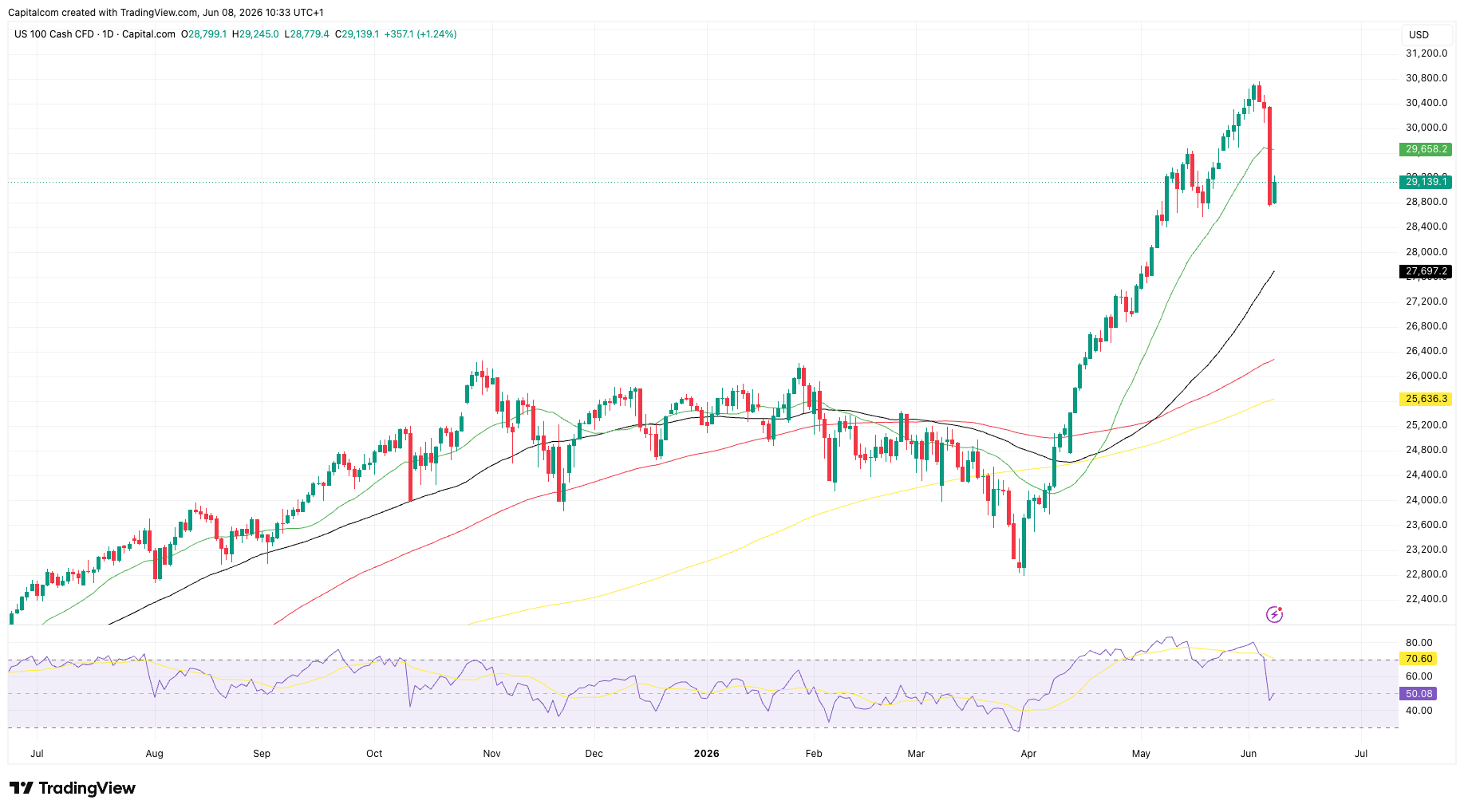
After months of relentless gains, global markets have finally encountered a catalyst strong enough to challenge the prevailing optimism. The Nasdaq 100 has fallen around 5% from its recent highs, while the S&P 500 and major indices across Europe and Asia have also come under pressure. In isolation, the move is not particularly dramatic. After all, US equities had rallied more than 30% from their March lows. What is more significant is what the correction reveals about the market narrative. For the first time in several weeks, investors are being forced to confront a combination of stretched positioning, rising inflation risks and renewed geopolitical tensions simultaneously.
Nasdaq 100 daily chart
Past performance is not a reliable indicator of future results.
The warning signs had been building for some time. Technical indicators across US indices were flashing increasingly overbought conditions, while options markets suggested positioning had become heavily skewed toward further gains. Investors had become comfortable with a world where strong earnings, AI-driven growth and progress toward a US-Iran agreement justified ever-higher valuations. That confidence left little room for disappointment. Once the narrative began to shift, the unwind was swift.
The catalyst came from several directions at once. The first was the US labour market. Friday's non-farm payrolls report reinforced the view that the economy remains resilient despite elevated interest rates. Under normal circumstances, strong employment data would be welcomed. However, in the current environment, it has a different implication. A robust labour market reduces the urgency for the Federal Reserve to support growth and increases the likelihood that policymakers remain focused on inflation. Markets have responded by sharply repricing expectations for monetary policy, with the probability of a Fed rate hike by year-end rising significantly over the past week.
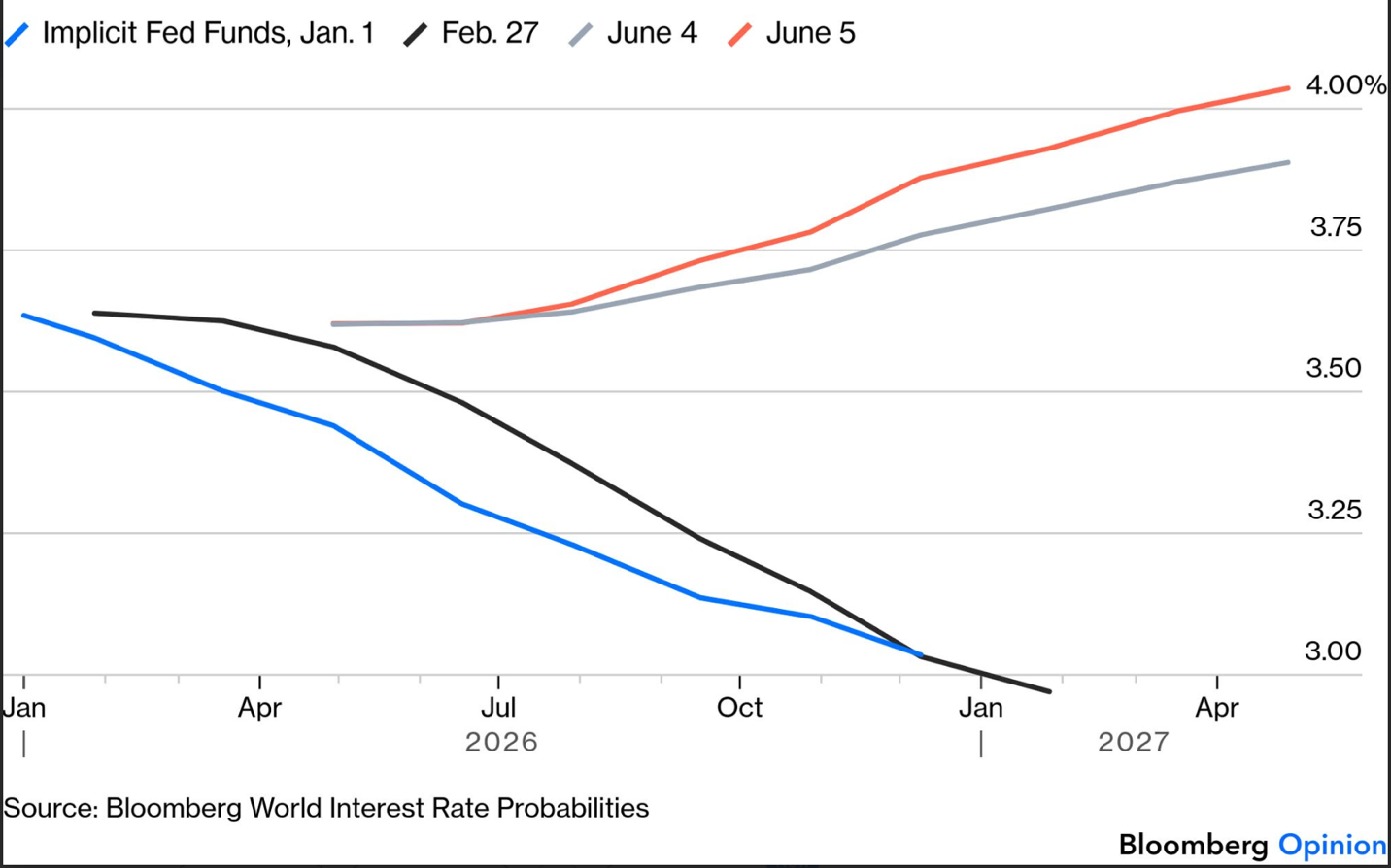
That shift in policy expectations is particularly important because inflation remains well above target. While recent PCE data offered some reassurance, broader inflation pressures continue to simmer beneath the surface. Energy costs remain elevated, fiscal policy remains supportive and the artificial intelligence investment boom is creating extraordinary demand for labour, semiconductors, energy and industrial metals. The stronger the AI build-out becomes, the greater the competition for resources across the economy. In that sense, one of the biggest drivers of the current bull market may also be contributing to the inflationary pressures that ultimately threaten it.
At the same time, geopolitical risks have re-emerged. Renewed exchanges between Iran and Israel over the weekend have complicated what had previously appeared to be a gradual move toward a diplomatic resolution. While negotiations between the US and Iran remain ongoing, the latest developments serve as a reminder that the path toward any agreement remains fragile. Oil prices have responded accordingly, climbing around 5% as traders rebuild some geopolitical premium into energy markets. While crude remains below the peaks reached earlier in the conflict, the move reinforces concerns that inflation risks are not disappearing anytime soon.
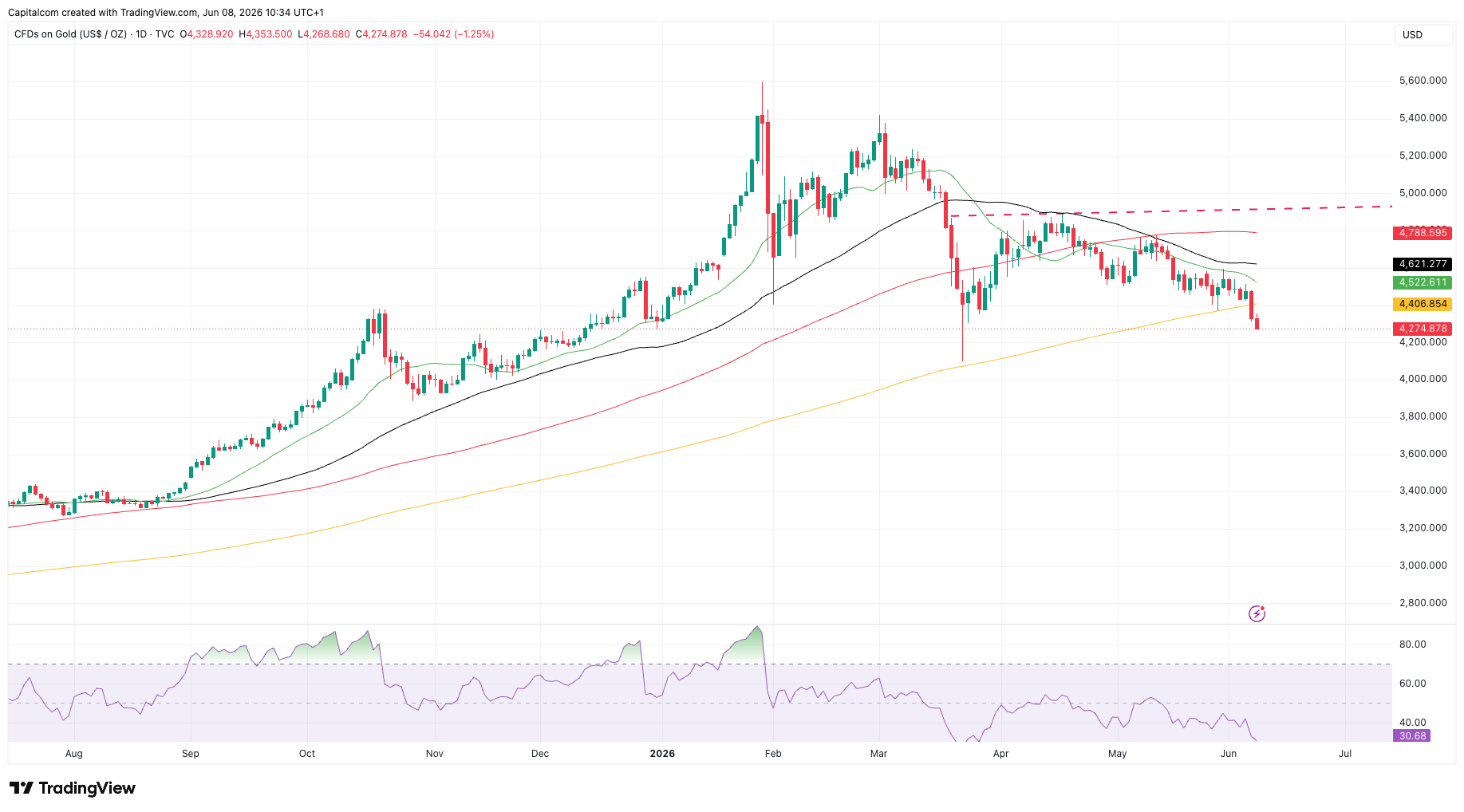
The reaction across asset classes tells a consistent story. Treasury yields have moved higher as investors demand greater compensation for inflation and policy uncertainty. The US dollar has strengthened as markets price a more restrictive Federal Reserve. Meanwhile, gold has come under pressure despite the geopolitical backdrop. Normally, heightened tensions would support demand for safe-haven assets. Instead, rising yields and a stronger dollar have dominated, highlighting the extent to which monetary policy expectations are driving markets. Gold's break below its 200-day moving average illustrates how powerful that dynamic has become.
Gold (XAU/USD) daily chart
Past performance is not a reliable indicator of future results.
Looking ahead, the focus now turns to inflation data and central banks. This week's US CPI and PPI reports will be closely watched for confirmation that inflation remains persistent. In Europe, the ECB is widely expected to raise rates, further reinforcing the global shift away from discussions about rate cuts and toward concerns about additional tightening. The following week brings a crucial Federal Reserve meeting, which will also mark an important opportunity for markets to assess the policy approach of new Chair Kevin Warsh.
The broader question is whether this is the beginning of a more significant correction or simply a healthy pause within a larger bull market. The case for continued strength in equities remains compelling. Earnings growth is still exceptional, particularly among AI-linked companies, and the long-term productivity story remains intact. However, after such a powerful rally, markets are no longer being driven by earnings alone. Inflation, rates and geopolitics have returned to the foreground.
For now, the most likely outcome is a period of increased two-way volatility. The rally had become increasingly one-directional, with investors willing to overlook almost every risk. What markets are experiencing now may simply be the process of reintroducing uncertainty into prices. Whether that evolves into something more substantial will depend on the data, the central banks and the next chapter of a geopolitical story that remains far from resolved.