
SARB hikes to 7.25%. Here's why USD/ZAR hasn't rallied much
The South African Reserve Bank raised its repo rate to 7.25%, yet USD/ZAR remains muted near 16.40–16.46. Explore how Federal Reserve policy, divergent forward guidance, and oil price pressures affect the rand.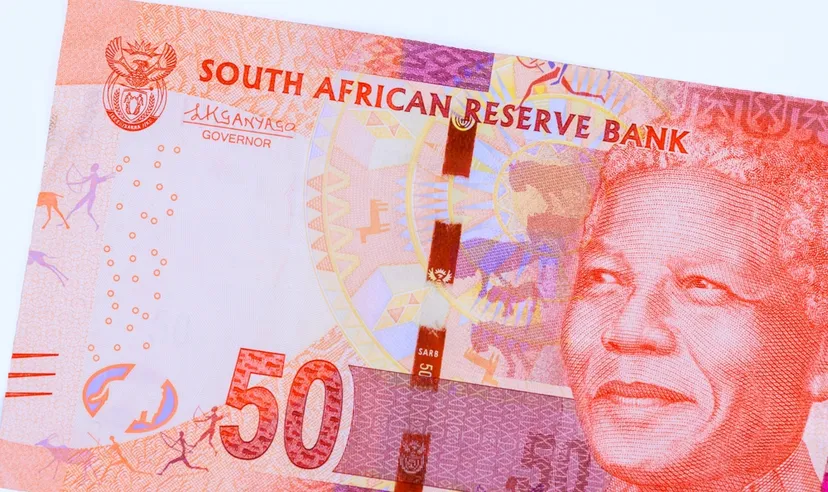
The South African Reserve Bank's Monetary Policy Committee raised the repo rate by 25 basis points to 7.25% on 23 September, taking the prime lending rate to 10.75% from 25 September. All six members voted for the increase, a shift from July's split 4-2 decision to hold, and it marks the second hike of 2026, following May's move to 7.00%.
USDZAR's reaction has been muted rather than a clean drop. On the four-hour chart, the pair pushed up from support near 16.20 through mid-September and, by the day of the decision, was testing resistance around 16.40–16.46, essentially where it sits now. Reclaiming that zone and holding it on a pullback, rather than the hike itself, is what would signal the rand gaining the upper hand.
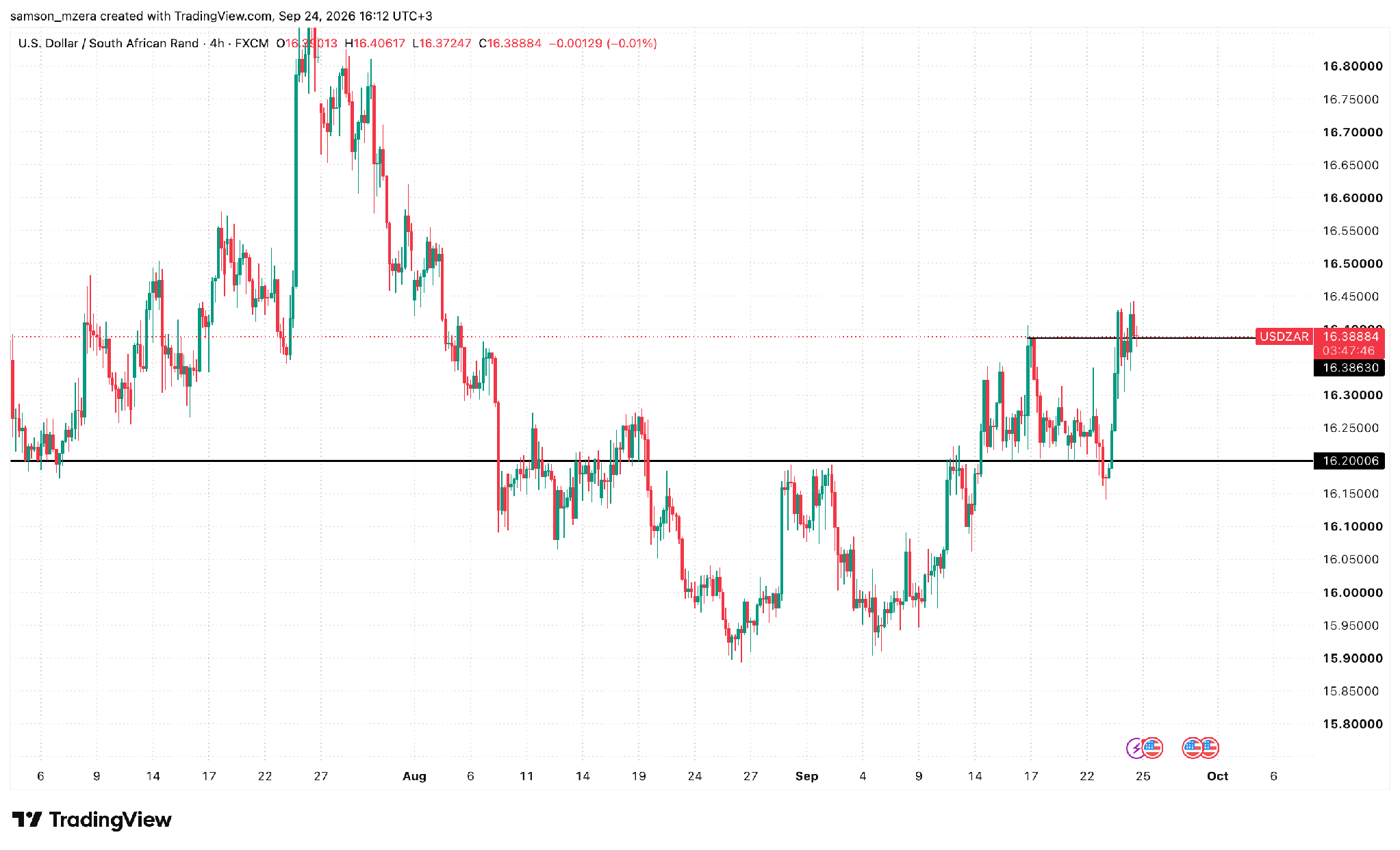
USD/ZAR, 4-hour chart, 24 September 2026, 16:12 UTC+3. Source: TradingView; Capital.com prices.
It's the spread, and where it's expected to go, not the level
A rate hike is normally rand-supportive through one specific channel: it widens the gap between what rand assets pay and what dollar assets pay, and carry trades are priced on that gap rather than on either rate in isolation. More than that, they're priced on where the gap is expected to sit in future, since a trade held for months only works if the spread that justified opening it is still there when it's time to close it. That distinction, spread over level and future over current, is the key to why USDZAR hasn't dropped on the back of this hike.
The timing explains why. A week before the SARB moved, on 16 September, the Federal Reserve hiked its own rate to 3.75–4.00% and signalled it isn't finished either: sixteen of eighteen FOMC members pencilled in at least one more increase the funds rate at 4.1% through 2027 rather than cutting it. Every basis point the SARB adds is being matched, in the market's expectations, by a Fed that is still tightening on the other side of the trade. A domestic hike delivered into a global tightening cycle buys considerably less currency support than the same hike delivered in isolation, because the spread it's meant to widen is being squeezed from the other direction at the same time.
Forward guidance from the two central banks is pointing in opposite directions, which matters more than the hike itself. The SARB's own quarterly projections describe a policy rate that's broadly stable from here, its focus now is on pulling inflation back under 4% from 4.4% rather than continuing to climb, while the Fed's dot plot still has room for another increase in 2026 and shows no cuts pencilled in before 2028. If markets expect that gap to hold steady or narrow rather than widen, September's hike doesn't give the rand lasting support, it simply resets the starting point without changing the trajectory.
Oil compounds that, on a track the SARB can't touch at all. South Africa is a net importer of crude, so the price spikes coming out of the Middle East conflict, worsened by Russia-Ukraine's disrupted refining, widen the country's import bill directly, a drag on the currency that has nothing to do with either central bank. Geopolitical oil shocks also tend to send capital into the dollar as a safe haven more broadly, pushing USD higher against most currencies at once, rand included.
There's also an asymmetry in what each economy can absorb, and it's part of why the guidance splits the way it does. The Fed can credibly signal another hike because the data it's tightening into still looks resilient, US growth near 2.3% and unemployment at 4.1%. The SARB, hiking into a domestic growth outlook closer to 1.2–2.0%, has far less room to keep raising rates without doing real damage, which is exactly why its own guidance already points to a pause rather than a continued climb. Markets are pricing that constraint in, which is a large part of why the rand hasn't rallied on a hike that, on paper, should have supported it.
What would actually move the pair
Put together, the common thread is that this hike doesn't change the market's expectation for where the SARB-Fed spread is heading, and that expectation, not the size of any one move, is what carry trades are priced on. For USDZAR to break decisively below 16.20, the market would need to see that expected gap actually widen: either the Fed's pencilled-in 2026 hike gets pushed out or dropped, or the SARB surprises with a steeper path than its own guidance currently suggests. Oil retreating as Middle East tensions ease would help on a separate track. Absent one of those, the pair is more likely to keep oscillating between the 16.20 support and 16.40–16.46 resistance than to trend cleanly lower. A clean break above 16.46 would say the Fed side of that spread is winning; a break below 16.20 would say the market has started pricing a wider gap in the rand's favour.