
RBNZ holds at 2.75% as NZD/USD tests its October floor
The RBNZ held the Official Cash Rate at 2.75% in a split 4–3 vote, surprising markets and sending NZD/USD to test its October floor. Examine the central bank's balancing act, inflation pressures, and key upcoming events shaping the kiwi's trajectory.
The market priced a hike and got a pause. Money markets had all but locked in a 25bp increase to 3.00%; instead the Reserve Bank of New Zealand’s Monetary Policy Committee voted 4–3 to hold the Official Cash Rate at 2.75%. Governor Breman sided with the majority.
The kiwi repriced quickly. NZD/USD moved from the 0.5680 area to an intraday low of 0.5572 in the hour after the 01:00 GMT announcement, briefly piercing the October floor near 0.5581 before recovering part of the move. At 16:33 UTC+3, or 13:33 GMT, the daily chart showed the pair at 0.56147, down 1.15% on a candle that was still open, so the figure is an intraday snapshot rather than a final verdict.
The question now: was this a one-off repricing of a single meeting, or the start of a test of the year’s lows?
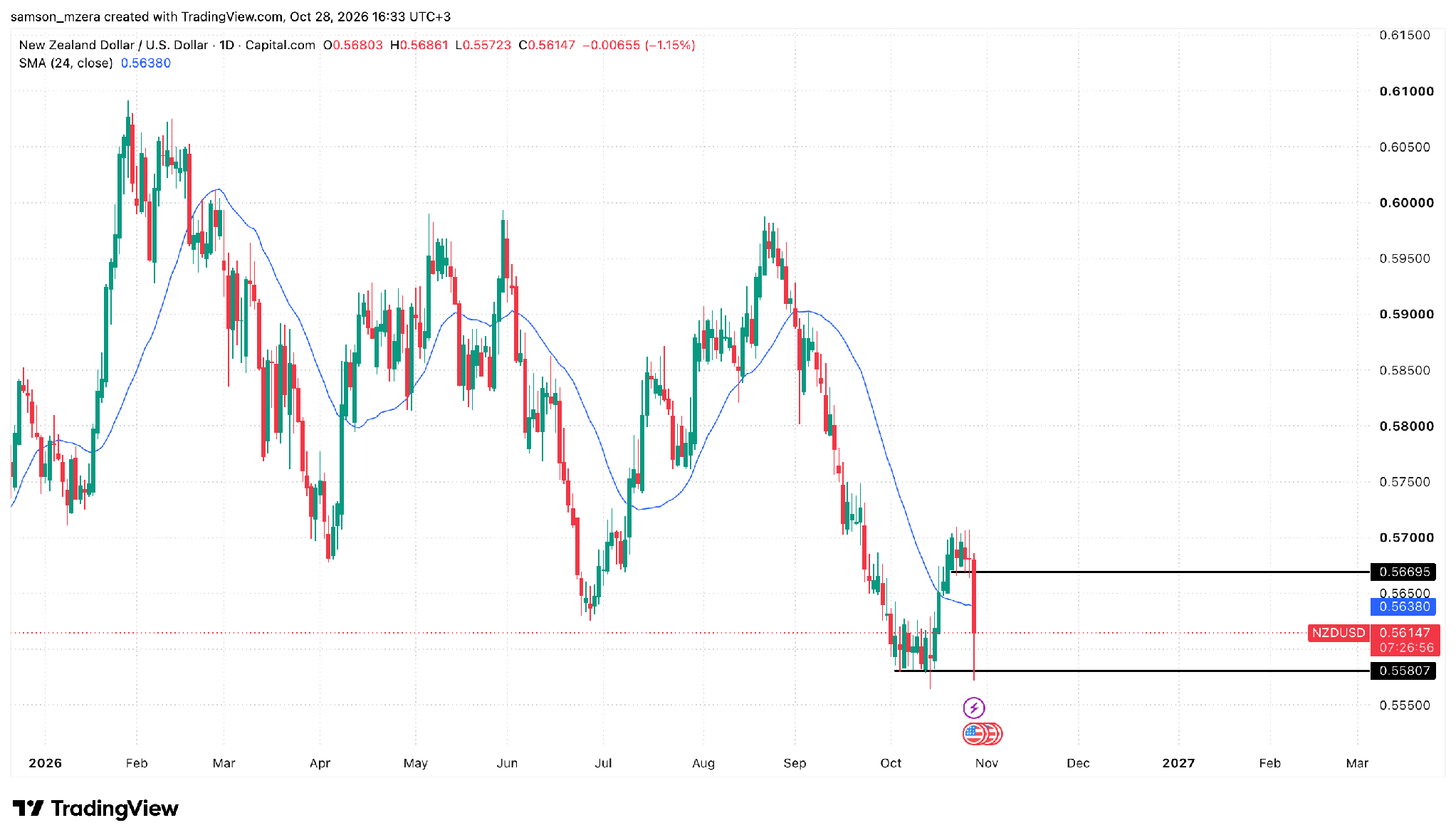
Figure 1: NZD/USD daily with 24-period SMA. Source: TradingView, Capital.com feed, 28 October 2026, 16:33 UTC+3.
A floor that keeps getting tested
On the hourly chart, 0.56695 had acted as the base of a week-long range between 21 and 27 October. Price returned to it several times and held. The decision candle closed below it, and the pair now trades below a falling 24-hour SMA at 0.56432.
The bigger picture sits on the daily and four-hour charts. NZD/USD slid from near 0.5985 in late August to around 0.5581 by early October, then built a base there. Several candles wicked below it, the deepest near 0.5565 in mid-October, but none was sustained. That makes 0.5581 a zone rather than a precise line, and today’s 0.5572 low fits the same pattern. The late-October bounce to about 0.5710 now looks like a recovery that paused below resistance.
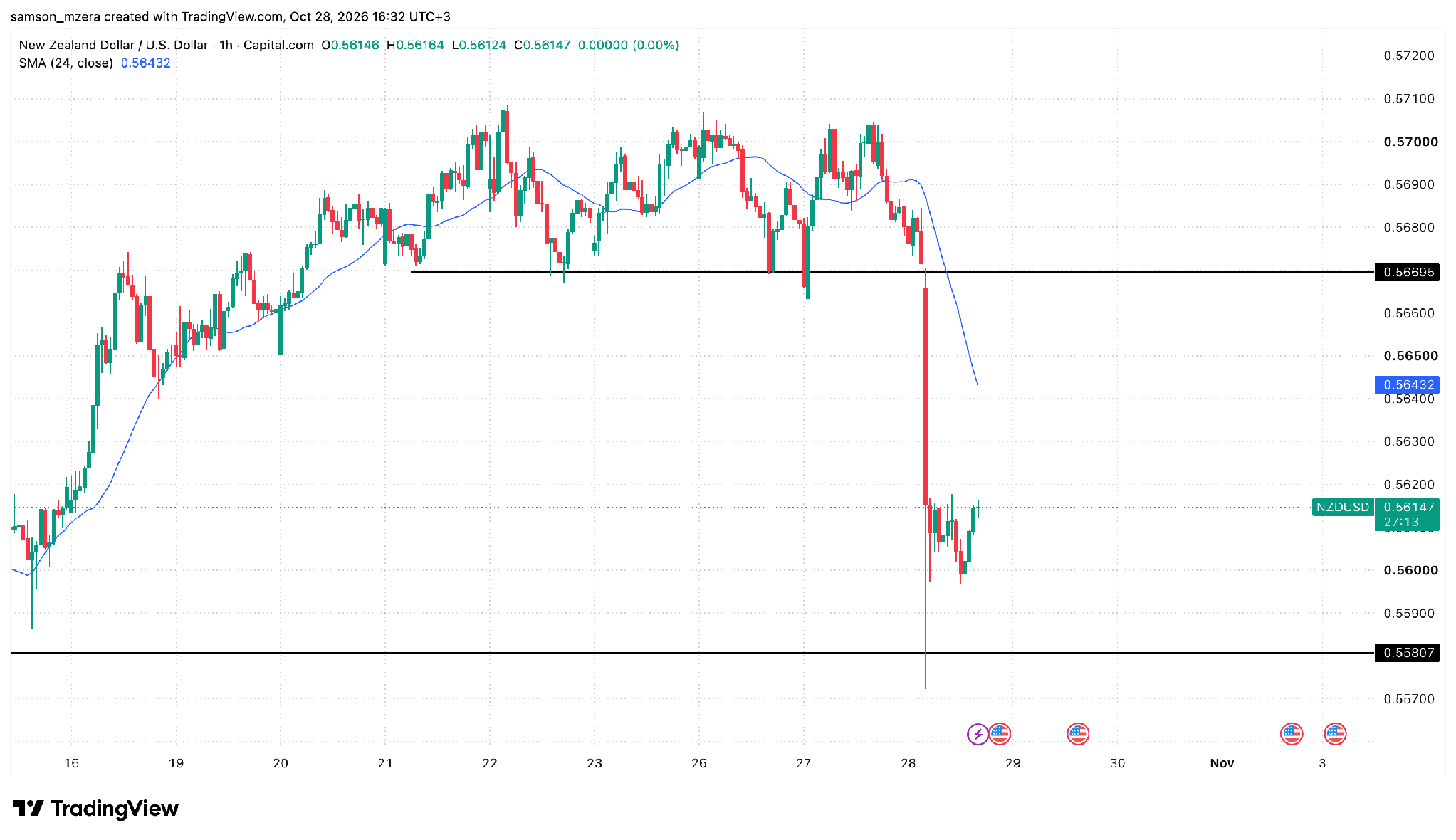
Figure 2: NZD/USD 1-hour, showing the break of the 0.56695 range floor on the decision. Source: TradingView, Capital.com feed, 28 October 2026, 16:32 UTC+3.
The RBNZ’s balancing act
The split vote shows a committee weighing competing pressures. Both camps still expect higher rates; they disagree on timing.
| Camp | Members | Core argument |
|---|---|---|
| Hold (4) | Breman, Hansen, Gai, Williams | Two hikes need time to work; Q3 inflation undershot; wages subdued; expectations stable; consumption and investment weak |
| Hike (3) | Silk, Gourley, Conway | Core inflation above target for too long; risk it becomes entrenched; growth resilient enough; acting now avoids doing more later |
Inflation remains above target. Annual CPI eased to 3.7% in Q3 from 4.1%, still well above the 1–3% band. Forecasters see a rebound to 4.5–4.7% in Q4 as fuel costs and a weaker currency feed through.
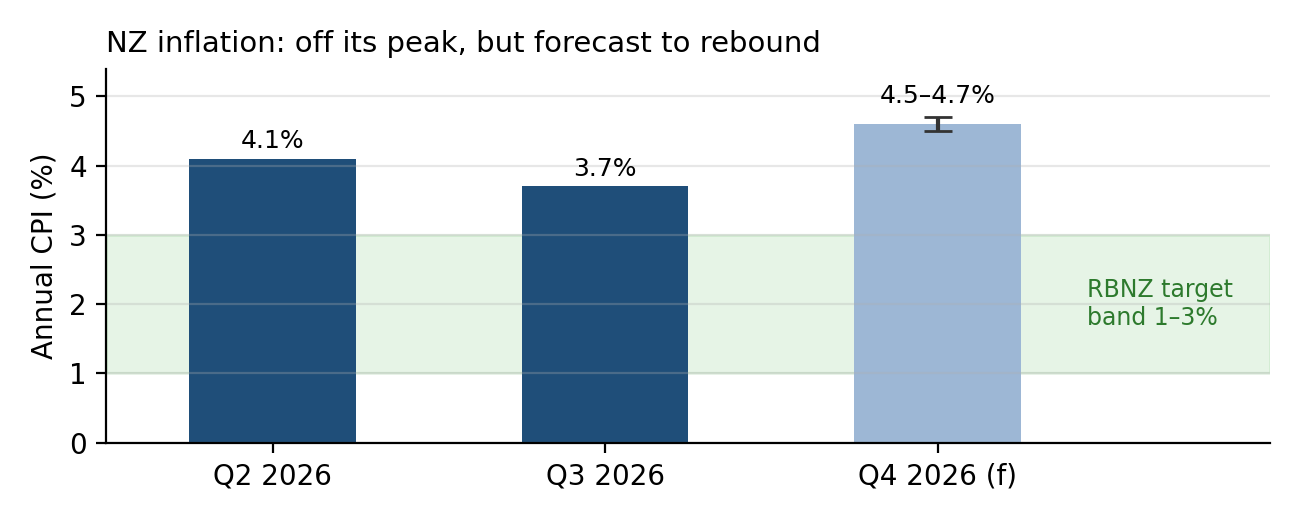
Figure 3: NZ annual CPI vs the RBNZ target band. Q4 is a forecast range. Sources: Stats NZ via Trading Economics; forecaster estimates.
Domestic demand argues for patience. After two hikes, from 2.25% to 2.75%, the majority wanted more time to assess the effects before adding more.
The exchange rate has two effects. The RBNZ says a lower exchange rate supports exporters. It also raises import prices, adding to the inflation pressure the minority is concerned about.
Politics and global conditions add uncertainty. New Zealand votes on 7 November. A Labour-led government has signalled it would restore the RBNZ’s dual mandate, which markets could read as more growth-tolerant. The committee also flagged geopolitics, high energy prices, rising debt and an uncertain AI investment boom.
What has been driving the kiwi
Relative policy outlook. Expectations for New Zealand monetary policy relative to the US have been a key influence. The Fed raised rates in September to 3.75–4.00%, while the OCR stands at 2.75%. Today’s pause led markets to reassess how quickly that difference in policy settings might change. On Westpac’s forecast path to a 4% peak, the OCR would reach the current Fed range around mid-to-late 2027. Interest rate differentials are one of several factors that can influence exchange rates, and their effect is not consistent over time.
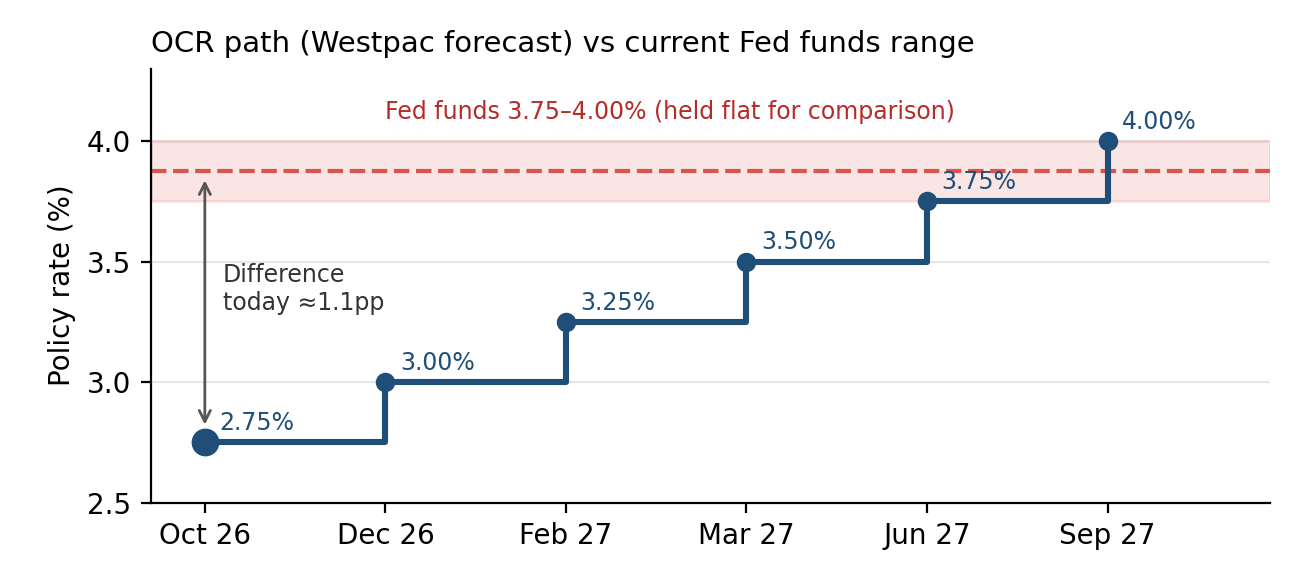
Figure 4: Westpac’s forecast OCR path vs the current Fed funds range, held flat for comparison only. Illustrative; forecasts are not a reliable indicator of future outcomes. Source: Westpac via ActionForex; Federal Reserve.
Regional comparisons. Closer to home, strong Australian inflation data and commentary from the Reserve Bank of Australia have lifted expectations of an Australian rate increase. Against that backdrop, NZD/AUD moved to a cycle low near 0.7980, showing that today’s move reflected New Zealand-specific factors as well as the US dollar.
Energy and global conditions. Higher oil prices have a dual effect on New Zealand: they weigh on the terms of trade and complicate the inflation outlook the RBNZ is managing. The NZD has also historically been sensitive to shifts in global risk appetite, and the RBNZ itself highlighted downside risks to the global outlook today.
Forward guidance. Offsetting some of these influences, the committee was clear that the pause is not a change of direction. All members still see a case for a higher OCR over time, which leaves room for expectations to adjust again as new data arrive.
What to watch
Today’s decision leaves both sides of the debate open. The RBNZ has paused, not changed direction: all seven committee members still see a case for a higher OCR in time, and the Governor described further increases as likely but conditional on the data.
On one side, inflation remains above the target band and is forecast to rise again in the fourth quarter, which keeps the hawkish minority’s case alive. On the other, weak household spending, subdued wages and stable inflation expectations support the majority’s preference for patience. Global conditions, energy prices and the outcome of the 7 November election add further uncertainty.
The coming weeks bring data that will inform which view gains ground before the 9 December Monetary Policy Statement, alongside developments in US policy.
| Date | Event | Focus |
|---|---|---|
| 28 Oct, 18:00 GMT | Fed decision | Guidance on the US policy path |
| 4 Nov | NZ Q3 labour market data | Evidence on wage pressures |
| 7 Nov | NZ general election | Possible implications for the RBNZ mandate |
| 17–24 Nov | RBNZ inflation-expectations surveys | How households and businesses view future inflation |
| 9 Dec | RBNZ Monetary Policy Statement | Updated forecasts and the next OCR decision |
Table 2: Event calendar. Dates per Westpac and the RBNZ schedule.
For now, NZD/USD sits close to its October lows, with the RBNZ’s next steps dependent on how the domestic and global outlook evolves.