Trade US Dollar / Canadian dollar
The USD/CAD currency pair is composed of the United States dollar as the base currency and the Canadian dollar as the counter currency. The USD/CAD chart represents the relationship between the American and Canadian dollars, essentially how many Canadian dollars can be traded for one American dollar. The latter has given the USD/CAD currency pair a nickname ‘loonie’, because of the loon bird, featured on Canada’s one-dollar coin. The USD/CAD boasts a remarkable trading volume as one of the world’s commodity currency pairs.
A brief history of the US dollar
One of the world’s most influential currencies, the US dollar dates its history back to Joachimstal, now modern-day Germany. In the town, silver ‘thalers’ were minted, each with a standardised weight – 29.2 g. These coins were widely used across the European continent and eventually found its way to the New World – America.
Following the American Revolution, in 1972 the newly formed US Congress instated the ‘thaler’ as the official currency, although at a slightly lighter weight – 27.0 g. This was done as a method of standardisation, following the corrupt ‘continental bill’ system.
Although still closely tied to the price of silver and gold, the US dollar has developed as a currency spawning a multitude of coins and notes. Today, the currency is controlled by the Federal Reserve, the central bank of the United States, established in 1913.
The USD is the world’s foremost reserve currency, held by numerous countries as part of their foreign exchange reserves. It also makes up six out of eight of the world’s Forex pairs. The US dollar is denoted by the symbol $.
The story behind CAD
The Canadian dollar is the official currency of Canada and unofficial currency to Saint Pierre and Miquelon. Issued by the Bank of Canada, it is the world’s 7th most traded currency. Also known by the nickname ‘loonie’, the currency uses the symbol $, Can$ or C$.
Moving from the use of beaver pelts as a form of currency in the 1600s, Canada’s currency has gone through a number of changes. By the 18th century a variety of coins were in circulation on the territory, all without a standardisation process.
Like the USD, Canada has a history of using the Spanish dollar or ‘thaler’ as far back as the early 1800s. Various coinages were used provincially, such as the British Columbian dollar, the Nova Scotian dollar etc. In 1867, several states merged their currencies, creating the Dominion of Canada and the Canadian dollar.
What factors affect the USD/CAD pair?
The USD/CAD shows a negative correlation to various US dollar containing currencies, such as the GBP/USD, AUD/USD and NZD/USD, due to the dollar’s role as a counter currency, rather than a base currency.
The USD/CAD rate is also affected by key financial players, such as the Federal Reserve (US) and the Bank of Canada. Releases and announcements from these institutions – monetary policy, interest rate changes and other key news items – influence the currency pair’s volatility.
Canada’s economy is heavily correlated to oil prices, due to its status as the largest oil-producer to the US market and a major player as one of the world’s top oil exporters.
Where can the USD/CAD pair be traded?
Explore trading on one of the world’s major currency pairs and find the latest USD/CAD share price at Capital.com. Get the most up-to-date rates with the USD/CAD charts and trade smart on the ‘loonie’ currency pair.
Latest currencies articles

Swiss franc strength: Monday's move and the USD/CHF outlook
The Swiss franc started the week firm, pushing USD/CHF back to its autumn floor near 0.82. What drove the move, how the August–October swing unfolded, the event risks ahead and what the charts show. Not investment advice.
14:44, 2 November 2026
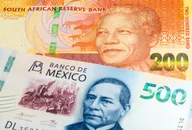
US midterm elections 2026: Can gridlock lift the peso and rand?
On 3 November, Americans vote for a new Congress. Mexico and South Africa get no ballot, yet their currencies will live with the result.
11:17, 2 November 2026

RBNZ holds at 2.75% as NZD/USD tests its October floor
The RBNZ held the Official Cash Rate at 2.75% in a split 4–3 vote, surprising markets and sending NZD/USD to test its October floor. Examine the central bank's balancing act, inflation pressures, and key upcoming events shaping the kiwi's trajectory.
14:18, 28 October 2026

Ueda signals further rate rises while the yen stays near 158
Ueda keeps further hikes on the table, but without a timeline the yen has made little headway. This article looks at the rate spread, carry demand and the USD/JPY levels to watch before the October BoJ meeting.
13:04, 6 October 2026

Related News


 Ratings and Reviews
 Ratings and Reviews